
Coffee, Creativity, and a Christ-Centered Education
An Interview with Tommy Keough (’13)
Originally appeared in the 2026 Whitefield Magazine
Thinking back to your days at Whitefield, what is one lesson or experience that shaped how you approach creativity today?
Whitefield also felt like a really good place to be the kind of person with broad interests. It was a smaller school, so there was way more opportunity to be whatever you wanted to be. Whatever I was interested in, I could have done, and I think I did.
Looking back, I see that a lot, especially through music. Mrs. Quiros was a huge part of my story. I spent so much time in her band room playing music with my friends. We would go in there, perform songs, make plans to perform at school, and just play as often as we could.
It felt like a playground for creativity. My friends and I had aspirations to be performative and to get really good at music, and there were a lot of opportunities for us to plug in. I played trumpet, piano, guitar, and sang. Things like the Wham Jam gave us a place to make things and share them.
If you could go back and give your high school self one piece of advice, what would it be?
All the insecurity that you feel about being weird will actually come to really help you at the end of the day. That quirkiness is going to be your greatest asset.
Were there any teachers, classes, or projects at Whitefield that sparked your interest in design or branding?
I remember Mr. Greg Hyde, my English teacher. He was just the coolest guy. He had this gruff voice, this tough-man presence, kind of looked like a firefighter, and he was just made out of nails, but he loved our English class. He genuinely taught me to appreciate poetry and to read critically. I remember new pathways opening in my brain from reading, then coming into class and realizing how much meaning was hidden in them. I sort of learned over time how much meaning is hidden in things.
The idea of communicating really simply is vital to my job now. The crux of good design is to communicate as much as you can, as simply as you can. You want people to walk away with a decent understanding of what you do, who you are, and what is important to you within just a few seconds.
High school is full of “aha” moments. What habits or skills from back then do you still rely on in your work?
I legitimately think I am a funnier person because I went to Whitefield! There was something about being part of a class where there was a lot of joking around. I feel so fondly about that now, because I learned to love funny, silly conversation, and that really stayed with me.
Your career path seems really unique. How did you go from graduating high school to running the creative vision for a multi-location coffee shop?
It is all unexpected twists.
Curiosity is what opens doors. Curiosity is how to love people well. Broad interests make you more fun to be around, more fun to work with, and more creative.
One of the benefits of my time at Whitefield was just how broad my interests were allowed to be, and that never really stopped. I went to UGA and studied landscape architecture. As a discipline with many subdisciplines, you are an artist, an engineer, a salesman, a presenter, a communicator. You really have to do a lot of different things. Halfway through college, I started taking on design clients and doing freelance work, mostly for bands in Athens. By the time I graduated, I was pretty certain I would make a career out of design.
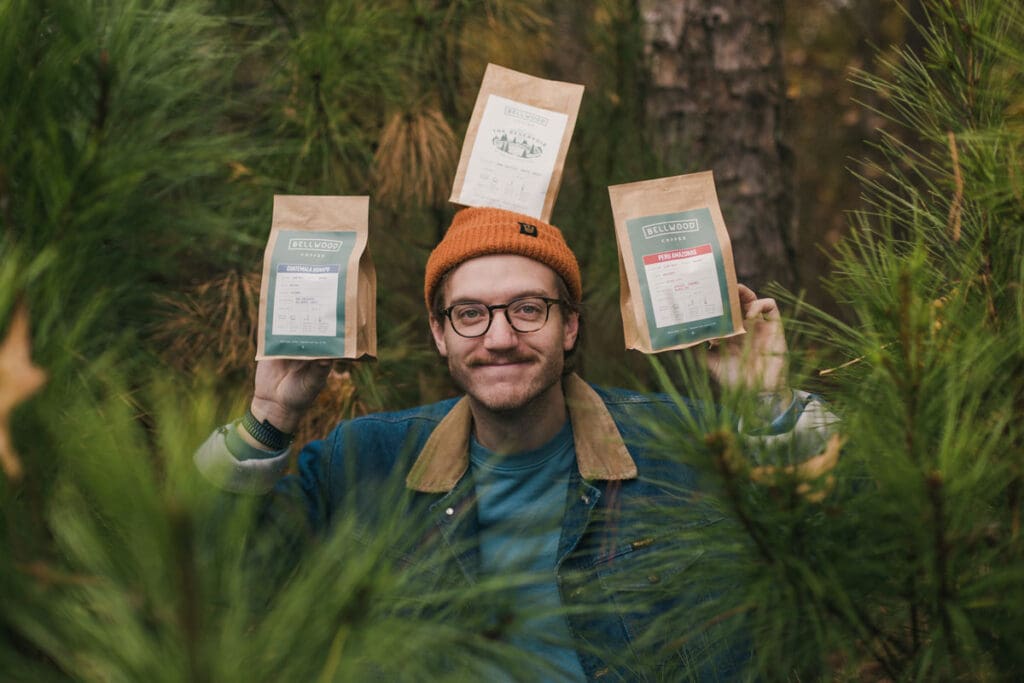
Bellwood Coffee also happened by accident. I was freelancing out of Chattahoochee Coffee Company in Atlanta, and I got to know the barista because I would sit at the bar. His name was Joel. We became buddies, then roommates, and Joel and his brother Charles would meet in my kitchen to discuss the coffee shop they wanted to start. I was sitting there too, and I kept interrupting and interjecting. Eventually, they were like, “Do you want to just come over and join us?”
They invited me to handle the branding, but they made it clear they could not pay me. So it turned into, instead of paying you, how about we let you join the team? I found myself accidentally joining a coffee shop.
Walk me through a typical day for you. How do you balance the creative side with the business side of running a brand?
The good news and the bad news are that there is no typical day. As we have grown from one location to multiple, we have become clearer about what we do and what we do not do. It has gone from small business mode to a thriving multi-location business. It’s really incredible.
We all live around the same area of town, so we end up here in the mornings and work on the fly. We all have our own things that we care about. We have new stores opening, merchandise coming in, new companies launching, and everybody has their own marching orders. We will be working on our own things, then see each other and think, we should do this, and that might turn into another project down the road. It is one of those things where I don’t know how it works, but it does.
Branding something people experience every day, like coffee, must come with pressure. How do you create a vibe that feels authentic across multiple locations?
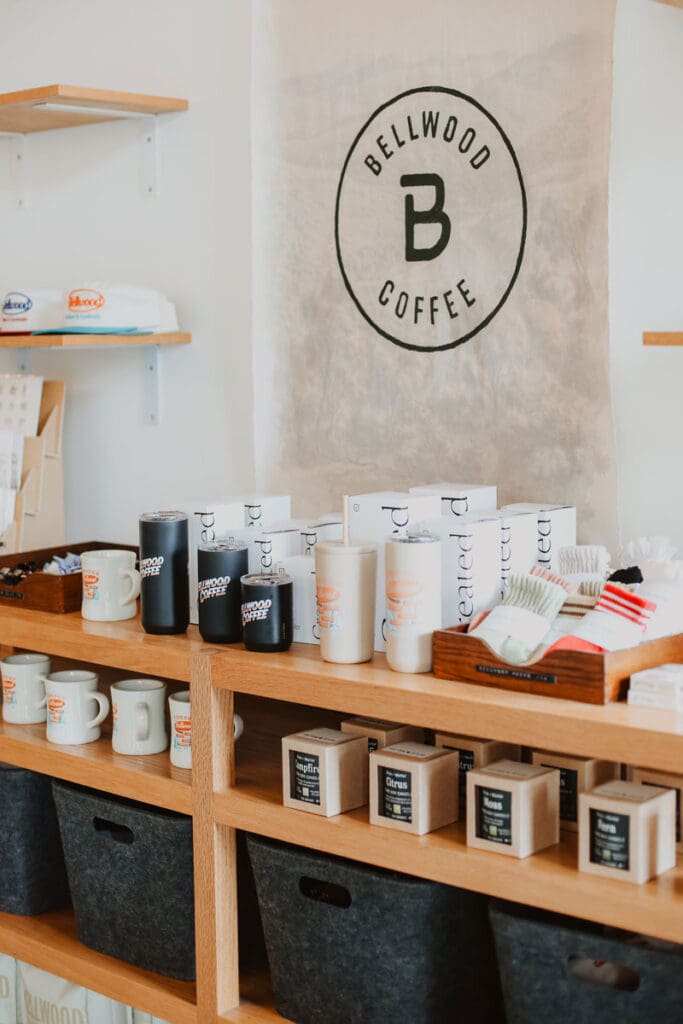
There is something about our brand that brings our personalities to life. The brand’s original inspiration was hiking and nature. Since then, we have moved away from that into a more realistic take on the brand. We still romanticize the outdoors, but we also acknowledge that we are in an urban city coffee shop.
That turned into this kind of Bob Ross appreciation and opened me up to new avenues from a design perspective, like mid-century advertising, camping references, and silly character-driven stuff. It is a sandbox, and I get to move in directions that inspire me. I love that I get to explore new ideas every day.
If a high school student came up to you and said, “I want to do what you do,” what is the first thing you would tell them?
I would first ask them to clarify what they think I do. laughs
If they wanted to start a coffee shop or work in coffee, curiosity really matters. If you are interested in something, ask questions. Talk to people who seem to know what you want to know. Sit down with them and ask good questions about what they do.
If they wanted to do branding or design, I would say just start. The way that I learned was that I had time, and I just started designing stuff. What I wanted was to be able to express myself and communicate, so I just started doing it. That turned into a real passion.
You have to become a student of whatever you are communicating. You really have to become a student of your craft.
Are there myths about working in creative leadership you wish more students understood?
A lot of people think design is just about making things look good, but that is not actually what makes you a good designer. Knowing theory and knowing how to use the programs can help you produce results, but what really makes you good is curiosity. That matters more than people realize.
What experiences or skills would you tell aspiring creatives to focus on while they are still in school?
I think broad interests matter a lot. Interesting people can be interested in a wider range of subjects. I am really thankful that I played sports, did music, and had many different activities growing up, even when I did not appreciate them at the time.
I would also say, just start doing the thing. If you want to design, start designing. If you want to create, start creating. When you see something and think, how did they do that, work backward. That is how you learn.
What is your go-to coffee order, and does it reveal anything about your personality?
I get a drip every single time. Black. It probably says that I value authenticity. If the product is not good, nothing is going to hide that. I also do not like asking baristas to do too much for me.
Who or what inspires your creative ideas?
All of the above.
I love antique shops. There are probably half a thousand photos on my phone of things I have found in antique shops. It is the typography, illustration, furniture, texture, and color. That is what the Bellwood Coffee brand is harkening back to, but it is also just what I personally identify with.
If you could redesign any everyday object or space besides a coffee shop, what would it be and why?
Honestly, my backyard. I recently visited Gibbs Gardens, and it reminded me of why I got into landscape architecture. I remember thinking that if I could make a place like that, I would be so happy. It goes away from design, but it also ties everything back together.
What is one moment in your career so far that made you think, “Yep, I am doing exactly what I am meant to do?”
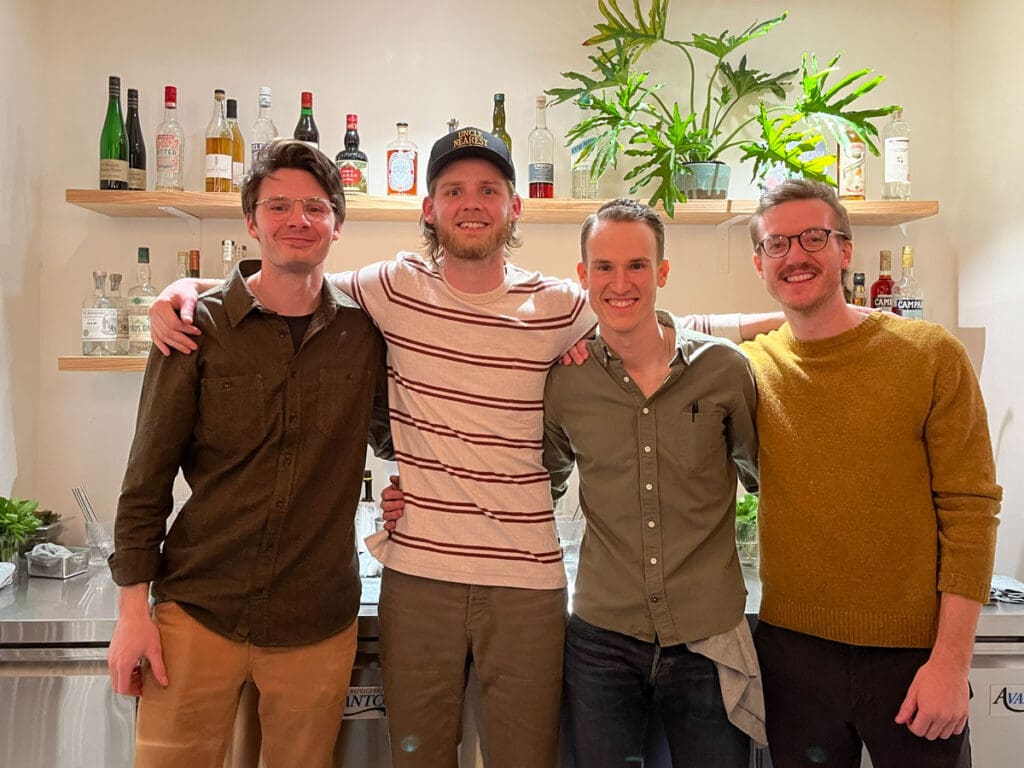
We had a pop-up here when we were opening our cocktail program, and it was an all-hands-on-deck situation. It ended up being the most fun I have ever had working for this company because I was interacting with all these people I knew and those I had never met, and it felt like a cool culmination.
The reason I love Bellwood is that it opens up a world for me, letting me see people, get to know them, see their faces, and interact with them. It was really the feeling of, “We built this. We built something people interact with, and that was powerful.” ■
For more information on Bellwood Coffee and to see Tommy’s creativity in action, visit BellwoodCoffee.com.