
How Whitefield Academy Celebrates Culture During Hispanic Heritage Month
Whitefield Academy celebrated Hispanic Heritage Month this fall with a campus-wide effort led by our Christian Life and Diversity team. In every division, students explored the cultures and contributions of the Hispanic community and the rich diversity within the body of Christ through stories, art, music, games, and more.
Lower School
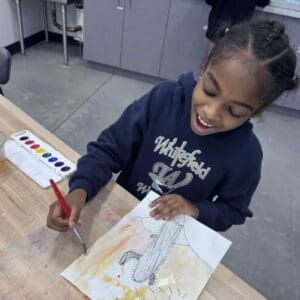
Our youngest students celebrated through books, art, and music.
In Spanish, Mrs. Krichko’s class took a “Story Walk” around the Lower School, while reading The Last Tamale by Orlando Mendiola. The book follows three kids in a funny family competition to claim the very last tamale. The Story Walk gave students a creative way to practice reading in Spanish.
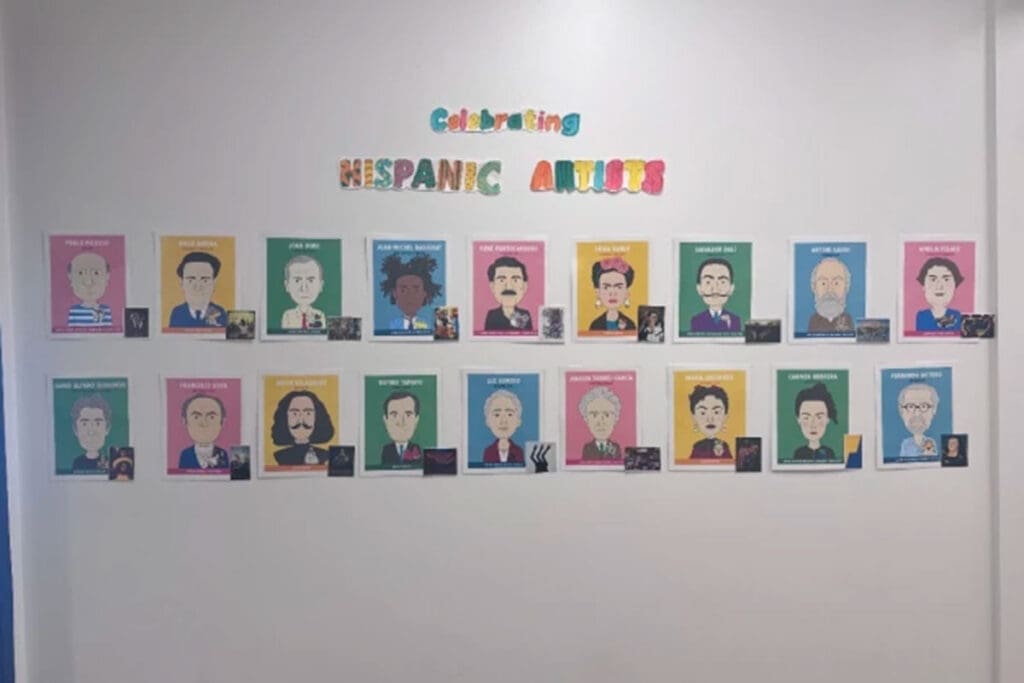
In Art, Mrs. Davis introduced students to Hispanic artists and what they were known for. PreK through Grade 3 explored geography by creating cacti from different materials. Fourth graders teamed up with Spanish class to create retablos, much like the Middle Schoolers did a few weeks earlier.
In Music, students spent two lessons exploring Hispanic culture through sound and movement. They started by learning what Hispanic Heritage Month is and why we celebrate it, then took a video tour of different Hispanic countries.
From there, they learned the Mexican Hat Dance, discovered the instruments used in Mexico, and picked Spanish greetings through song. They wrapped up by grabbing instruments of their own and playing along to salsa and Cuban music.
Middle School
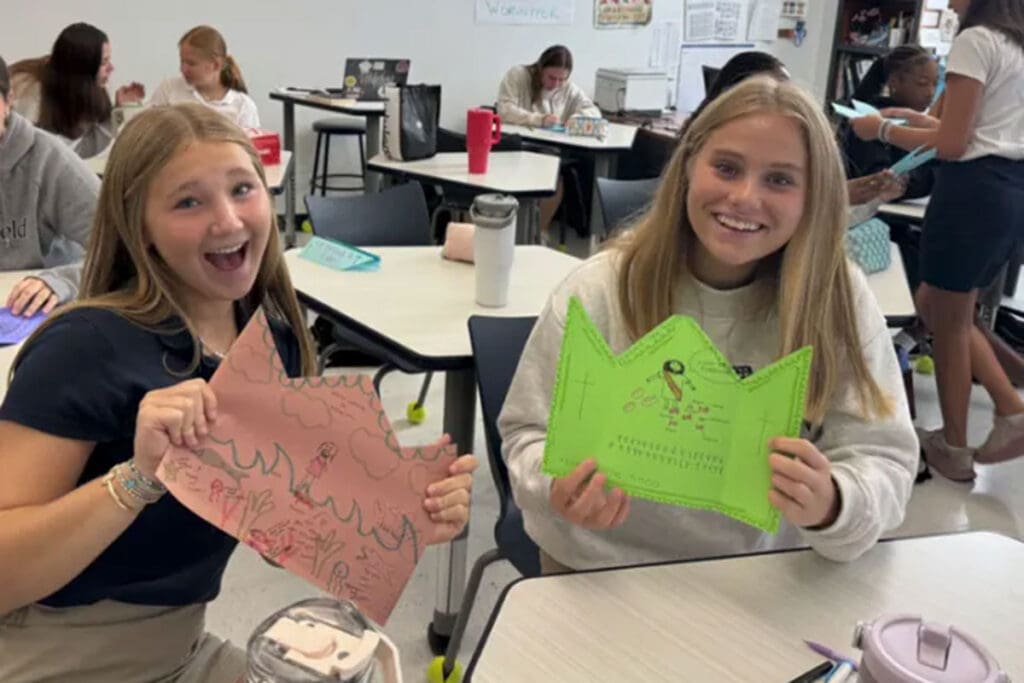
For the second year, the centerpiece of the Middle Schooler’s experience was the retablos project. This was a chance to recognize the influence of the early Church throughout Latin America and remember how the Gospel spread across cultures and generations.
In the Catholic Church, a retablo is the tall, multi-tiered structure set behind the altar. Its elaborate frames hold sacred objects, paintings, and sculptures that tell the story of Christ and the saints. When Spanish and Portuguese missionaries arrived in the Americas, they adapted this tradition into small, portable retablos. These could be carried from village to village to share the Gospel, illustrate miracle stories, and teach biblical truth in communities where few people could read or write.
Over time, these portable retablos became a folk art form, blending European Christian imagery with the vibrant colors, symbols, and styles of local cultures. Many Hispanic families still keep them at home as reminders of God’s presence and power.
Our hope is for students to see themselves as part of this ongoing story, using their gifts to carry Christ’s message into the world. Middle Schoolers put that into practice by presenting their finished retablos with Lower School students.
In Mrs. Millette’s Spanish class, students also learned about Frida Kahlo and her distinctive self-portraits, then created their own portraits in her style.
Mosaics Inspired by Gaudí
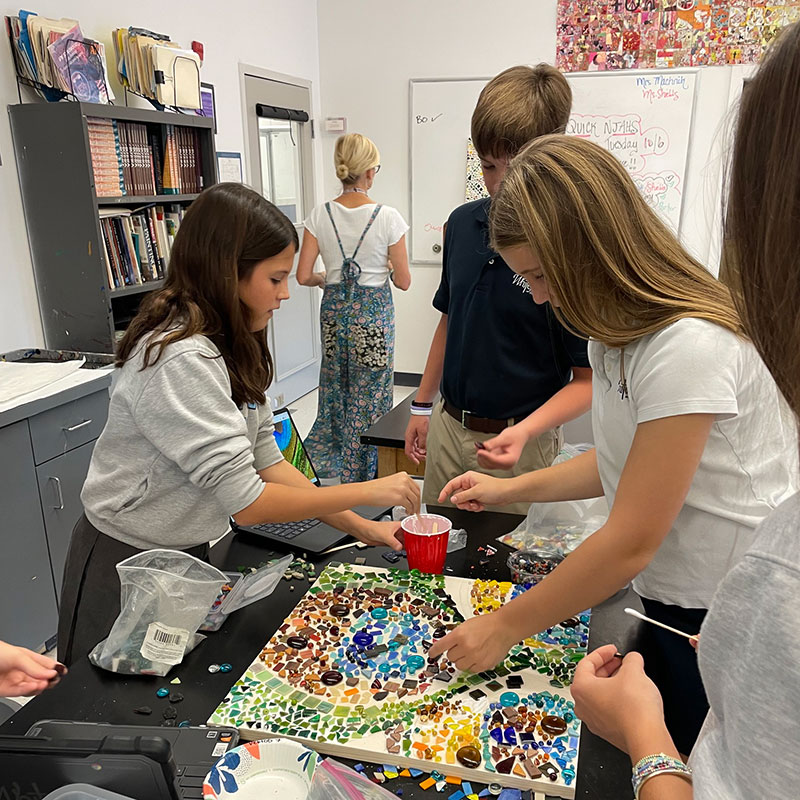
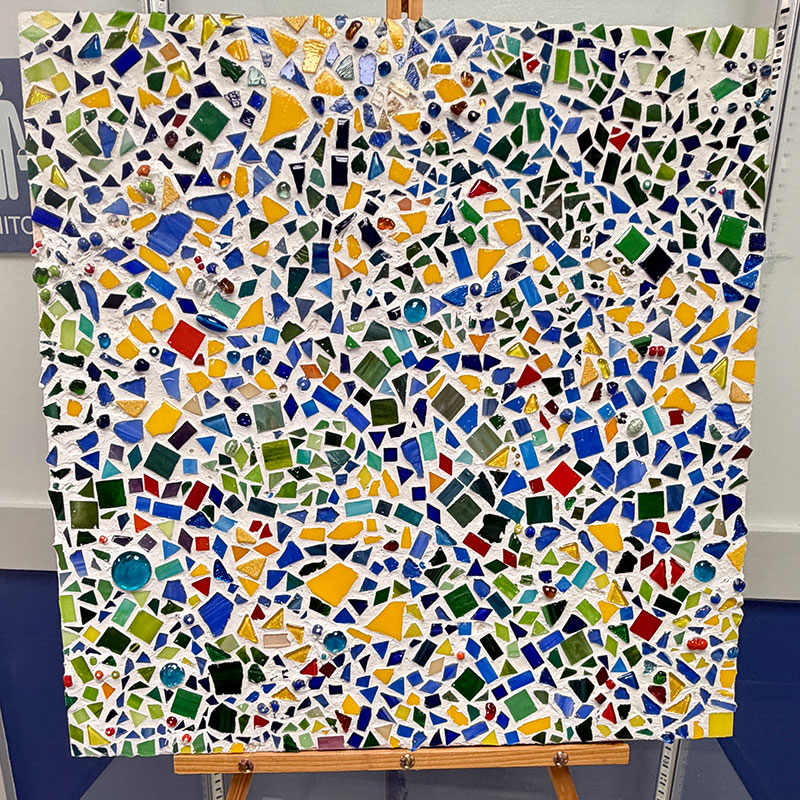
Three Middle School art classes created a Hispanic Heritage mosaic, inspired by Spanish architect Antoni Gaudí. Gaudí was known for trencadís (Catalan for “broken up”), a technique that uses broken tile, ceramic, and glass to bring buildings to life. His most famous work, La Sagrada Família in Barcelona, features towers modeled after the nearby mountain of Montserrat. Construction began in 1882 and continues today. Gaudí didn’t live to see it finished, trusting future artists to carry on the work.
Following Gaudí’s lead, each class chose an organic pattern from nature: a microscopic view of a leaf, the rings of a geode, and a peacock feather. They researched the pattern, drew an outline, and brought the design to life with ceramic, glass, and beads. The finished mosaics are now on display in Founder’s Hall.
Upper School
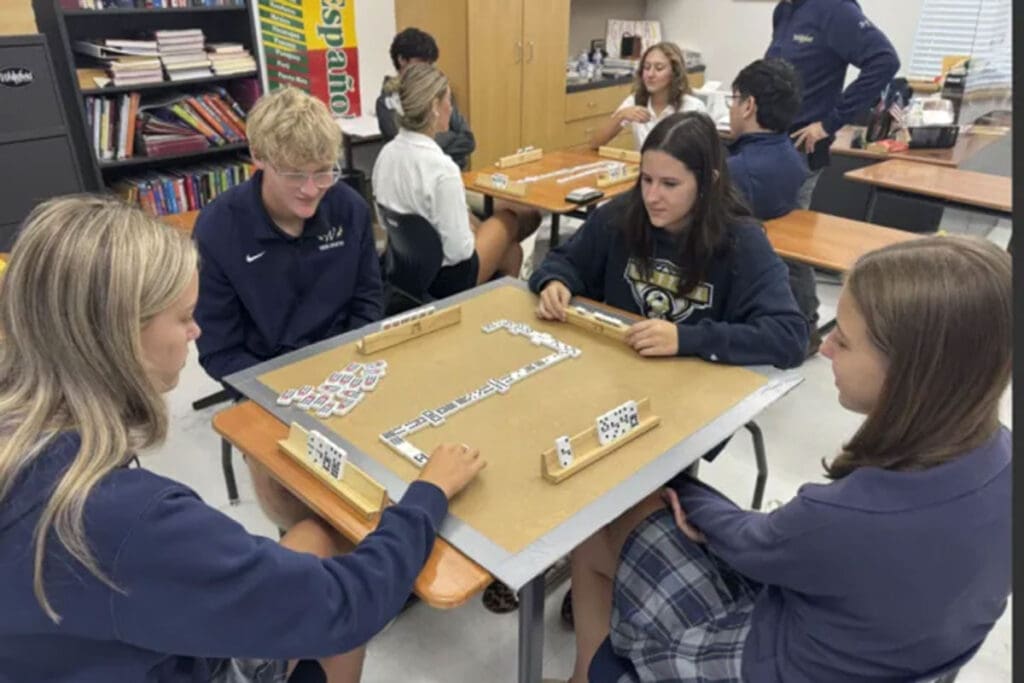
Mr. Jose Lezcano hosted the school’s sixth annual Cuban dominoes tournament, giving students a fun way to learn the game and celebrate together.
Brought to the Americas by the Europeans, dominoes is now considered a classic game in Cuba, played by all generations, genders, and classes. Cuban dominoes rules distinguish it from other countries because of the extensive slang players use during gameplay.
Cuban dominoes are a daily social event that combines competition with camaraderie. While walking through the streets, it’s common to hear the click-clack of dominoes and boisterous arguing or laughing.
Felix Lora, Executive Director of the Sandy Springs Mission, spoke to students during both Upper and Middle School chapels. Felix shared his testimony of how the Lord used short-term missionaries to share the Gospel with him as a teenager in the Dominican Republic. He walked students through 2 Corinthians 5:18–6:2, challenging them to consider what it means that God has given those who know Him the ministry of reconciliation and called them to be ambassadors for Christ.
Reading Across Campus
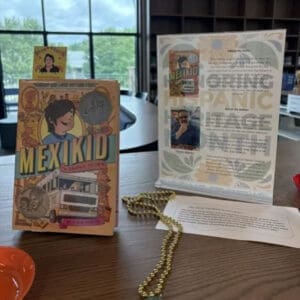
Throughout the month, we featured books by Hispanic authors in our libraries and classrooms to help students grow their love of reading.
In Grade 5, Mrs. Fawcett hosted one of her “book tastings,” where students sample several books. She holds these throughout the year, but this month’s selections all celebrated Hispanic heritage, including Esperanza Rising and several biographies.
In the Blunier Library, our librarians gathered a collection of titles for students to check out, along with fun facts about each book and author to spark interest. Featured books included:
- Mexikid: A Graphic Memoir by Pedro Martin
- Marcus Vega Doesn’t Speak Spanish by Pablo Cartaya
- A Sea of Lemon Trees: The Corrido of Roberto Alvarez by María Dolores Águila
- The House on Mango Street by Sandra Cisneros
- Esperanza Rising by Pam Muñoz Ryan
Diversity over Division
Whitefield’s annual Hispanic Heritage Month celebration grows out of a conviction we call Diversity Over Division. Each person is uniquely created in the image of God, deeply valued by Him, welcome to His unconditional love, and has inherent dignity and profound worth.
We know this because of what scripture tells us in Genesis 1:27: “So God created man in his own image, in the image of God he created him; male and female he created them.”
Rather than dividing people over differences, we seek to celebrate the beauty found in the wide diversity of people God has created. We’re grateful for the creative ways our faculty and staff brought Hispanic culture into classrooms across every division this month.